Monetization: a critical layer for IoT deployment
When OEMs consider potential risks to their deployments, they often conceptualize technical hurdles. Intermittent connectivity, security lapses, and integration breakdowns can be front-of-mind during development stages. However, many IoT endeavors don’t stall because of flawed technology alone. They flounder, or altogether fail, because the monetization and commercialization elements were an afterthought. The platform works, the devices connect, and yet, the offering fails to generate sustainable, scalable revenue.
When the device works but the business model breaks
The true test of a device’s resilience and future potential depends on strategic monetization. Many businesses fail when the IoT solution transitions from a lab-constrained proof-of-concept to a product deployed in the field with real-world usage and revenue/cost implications.
IoT devices are not one-time transactions. They exist within a dynamic system that includes ongoing connectivity costs, continuous platform maintenance, support obligations, and evolving customer expectations. Deployments are active relationships between manufacturers, customers, and end-users, with recurring costs and a constant mandate to deliver new value. Every deployed device incurs monthly expenses. If those costs aren’t closely aligned with how revenue is generated, even a technically successful product will begin to bleed margin at scale.
This is a surprisingly common failure mode in IoT. The solution works, adoption grows, deployments scale, and profitability erodes because monetization was treated as an afterthought instead of a foundational design decision. IoT OEMs can easily fall into the trap of assuming their primary value is in the hardware or software alone, and do not adequately plan for long-term revenue generation and growth as a result. If monetization isn’t baked into the business model from the outset, even the most innovative IoT products can become financial liabilities.
Monetization vs. billing: the defining commercial model of IoT recurring revenue
Monetization is how a connected solution generates revenue across its entire lifecycle. This can include subscriptions, usage-based pricing, tiered service levels, feature unlocks, seasonal plans, value-added services, data plan top-ups, overages, and more. Monetization is the revenue logic of an IoT product’s deployment strategy.
For IoT businesses, the monetization element is inextricable from the broader commercial model. The commercialization of IoT devices is a strategic framework that includes how you package, price, deliver, and maintain your IoT solution profitably and at scale.
A commercial model includes:
- How the solution is packaged and sold
- How connectivity is bundled as part of the device’s service
- How devices are activated, paused, or decommissioned
- How usage is measured and governed
- How costs are controlled as fleets scale globally
The distinction is essential. You can charge monthly and still lose revenue, especially if connectivity costs outpace revenue, or if convoluted billing complexity drags down operational efficiency. Connectivity costs fluctuate, usage patterns spike with seasonal demands, and global carriers behave differently across borders.
Devices and deployments rarely behave in a manner that adheres to manual, spreadsheet-driven logic. Without a holistic commercial model and dynamic billing platform, even steady recurring revenue streams can become unprofitable. OEMs need real-time visibility, flexible control, and robust analytical insights to prevent margins from collapsing.

How Zipit turns connected products into scalable business solutions
Zipit Wireless is an industry-leading IoT MVNO that offers global connectivity and customized strategic partnerships to our customers. Beyond our network of Tier-1 carrier relationships, we also offer billing and connectivity management platforms that offer precise and data-driven insights with transformative implications for IoT businesses. Zipit’s proprietary billing platform is a unified commercialization solution designed to help device manufacturers and IoT solution providers monetize at scale, across markets, and throughout the entire lifecycle of their connected products.
Zipit’s billing platform empowers OEMs to:
-
Unify connectivity control: Manage and automate multi-carrier connectivity, ensuring cost-effective global coverage while maintaining centralized oversight.
-
Gain accurate usage visibility: Track real-time network usage and cellular data consumption, enabling data-driven pricing models and proactive cost management.
-
Automate billing and revenue operations: Replace outdated, error-prone, and spreadsheet-driven processes with robust, automated billing that supports flexible monetization models and unique billing periods. This includes subscriptions, usage-based pricing, and complex connectivity service packaging. By streamlining customer billing with accurate, real-time data, OEMs can confidently unlock new revenue streams.
For OEMs and IoT solution providers, Zipit turns device monetization into a strategic, scalable engine for business growth while mitigating risk. With Zipit, recurring revenue is predictable, cost controls are built in, and global commercial expansion becomes a matter of execution rather than speculation.
Most connected IoT products aren’t monetized through a single lever. IoT is monetized through a stack of interdependent layers, each with its own economics, risks, and scaling challenges. This series of interconnected components determines whether your business model is scalable, sustainable, and profitable.
Understanding and intentionally designing each layer is what separates global industry leaders from simple device sellers.
Layer One - Hardware: the low-margin entry point
In modern IoT deployments, hardware is rarely the primary profit driver. Devices are often sold at slim margins to accelerate adoption, reduce friction at purchase, and rapidly expand the installed base. In this model, the IoT device is not the business itself; it is the gateway to a long-term service relationship.
This shift represents a fundamental change from earlier generations of connected products, where hardware sales were expected to carry the bulk of revenue. Today, sustainable IoT businesses are built on recurring services layered on top of deployed devices with long service lifecycles.
Why hardware-first monetization often falls short of full potential
Hardware-led monetization models share a few common characteristics:
- One-time purchases or devices bundled into a broader service agreement
- Margin compression over time as components commoditize and competition increases
- Limited flexibility after deployment, especially once devices are installed in the field
- Lack of insight into the device activation, device usage and behavior, customer location, network utilization, and more. Companies that leverage hardware sales as the primary driver of revenue leave these opportunities on the table, expecting end-users to figure out these details on their own.
The core risk at this layer is treating hardware as the product rather than as the access point. When monetization planning stops at device sales, IoT businesses struggle to justify ongoing fees later, particularly when customers perceive connectivity, platform access, and support as “included” or invisible. Once that expectation is set, introducing recurring charges becomes difficult without friction or churn.
Hardware sets the ceiling for future growth and monetization opportunities
Although hardware itself is rarely the primary profit center, it plays a significant role in determining what can be monetized over time.
Hardware decisions made early in the design process influence:
- Network compatibility and access (which technologies and carriers are supported)
- SIM form factor and configuration (embedded vs removable, single vs multi-profile)
- Geographic reach and the ability to expand into new markets
- Data behavior that underpins new service tiers and pricing models
A device designed narrowly for a single network or region may work well initially. However, this becomes a constraint when the business wants to scale globally or introduce new service offerings.
Designing devices for global expansion and longevity
Strategic hardware design is essential for unlocking future monetization opportunities. OEMs that plan for global deployment and long device lifecycles make intentional, forward-looking choices from the outset.
These decisions include:
- Supporting multiple network technologies to increase coverage and resilience
- Designing for flexible SIM architectures that can adapt as connectivity needs evolve
- Ensuring firmware and hardware can support new features, telemetry profiles, and security requirements over time
When hardware is designed with flexibility in mind, it enables monetization models that evolve alongside the business, rather than forcing costly redesigns or limiting expansion.
Hardware as the foundation for IoT monetization
The most successful IoT companies treat hardware as a strategic foundation, not a static asset. It’s the layer that enables everything above it in the IoT Monetization Stack: connectivity economics, platform value, billing logic, and lifecycle automation.
Platforms like Zipit Wireless support this approach by working with OEMs early in the design process, helping ensure hardware choices align with long-term connectivity strategy and commercialization goals. While hardware may not drive recurring revenue directly, it determines how much revenue is possible, how easily it scales, and how resilient the business will be over the life of the deployment.
"Thanks to our partnership with Zipit, Bushnell transformed our Trail Camera business by providing cellular subscription service options that enable a dramatically better user experience while generating roughly three times the lifetime profit for each camera."
- Jacob Thomason, Product Manager
Bushnell
Layer Two - Connectivity: the hidden margin risk in IoT deployments
It’s easy to view connectivity as a fixed, predictable line item: a few megabytes per device, multiplied by a monthly device count, passed neatly into a set subscription package. However, in practice, the economics of connectivity are incredibly dynamic. Data costs for many IoT use cases fluctuate, carrier pricing can vary by region and your organization’s buying power, and fragmented network access and feature availability impact performance and cost. A subscription priced at a monthly flat-rate per-device may appear profitable on paper, but it wildly miscalculates usage. Without accurate visibility, careful governance, and timely intervention, connectivity costs can demolish revenue as deployments scale globally.
Why is connectivity commercially volatile by default?
IoT connectivity costs are shaped by real-world conditions that are challenging to model upfront. These key variables include:
-
Carrier pricing variability: A plan that works economically in one country may be significantly more expensive in another. Local carrier agreements, regulatory environments, and interconnect fees all influence per-MB costs in ways that aren’t always visible at launch.
-
Unpredictable data usage: Devices don’t always behave the way simulations suggest. Firmware updates, retries, poor signal conditions, edge-case events, or new feature releases can all trigger unexpected spikes in data consumption.
-
Varying data costs: Cellular data isn’t free, and costs vary wildly based on geography, carrier agreements, network types, and usage patterns.
-
Roaming restrictions: Many global IoT deployments rely on roaming relationships that carry restrictions. Permanent roaming limitations can force migrations, renegotiations, or architectural changes that directly affect cost structure and margin.
-
Network access and feature availability: Access to specific network features (latency profiles, fallback options, IP routing configurations, low-power modes, etc.) can change both performance and cost. Choosing the wrong connectivity architecture early can lock OEMs into expensive tradeoffs later.
The "$X-per-month" pricing trap
A flat subscription priced at “$X per device per month” often looks healthy during pilots or early deployments. But as usage grows and geographic footprint expands, connectivity costs can quietly increase while revenue remains fixed. The result is a slow erosion of margin that does not become obvious until it’s difficult to unwind. The problem isn’t subscription pricing itself. It’s subscription pricing without connectivity governance.
Without accurate usage visibility, policy controls over SIMs and rate plans, and cost-aware planning, IoT companies are forced to absorb variability they never priced for. This demands connectivity management tools and billing solutions that are robust, agile, and simplified. Manufacturers should be able to access analytical insights through a streamlined, simplified, single-pane-of-glass solution.
Understanding connectivity as a core commercial component
The most resilient IoT businesses treat connectivity the same way they treat cloud infrastructure or payments: as a core commercial input that must be actively managed, measured, and optimized.
That means:
- Designing pricing models that account for real usage patterns
- Aligning service tiers with underlying connectivity cost profiles
- Monitoring consumption continuously, not retroactively
- Building flexibility into plans as devices, features, and markets evolve
When connectivity is treated as a pass-through expense or an afterthought, monetization becomes reactive. When it’s treated as a first-class input to the business model, monetization becomes durable.
Layer Three - Platform and service value: what customers perceive they're paying for
The average consumer or business end user does not buy technology for the sensors, SIM cards, or data plans themselves. They buy with outcomes in mind. This layer of the “IoT Monetization Stack” represents the perceived value of the connected solution. This is the part end-users typically understand, evaluate, and are willing to pay for repeatedly.
For many successful IoT businesses, this is where differentiation lives and where pricing power is created.
The platform is the product (from the customer's perspective)
While hardware and connectivity make the solution possible, the platform and services make it valuable. Customers interact with interfaces, reports, alerts, and automations, not with SIM profiles or carrier agreements.
Common sources of platform and service value include:
- Dashboards and analytics that translate raw data into insights
- Monitoring and alerting to surface issues before they become failures
- Automation and remote control that reduce manual intervention
- Reporting and compliance support for audits, regulations, and governance
- Service-level agreements (SLAs) and uptime guarantees that reduce risk, build confidence, and move the sales cycle forward
This is the layer customers compare when choosing between vendors. It’s also the layer that justifies tiered pricing, premium plans, and long-term contracts, and where OEMs can creatively maximize the nuances of their specific product offering.
Facing differentiation and risk
Platform value is customer-facing, so it’s tempting to keep adding features, increasing data granularity, or raising reporting frequency to stand out in the market. But in IoT, platform value is never free.
Every enhancement carries downstream financial implications:
- Higher telemetry frequency increases data usage
- Richer analytics require more processing and storage
- Real-time alerts demand more reliable connectivity
- Compliance reporting often requires longer data retention
This creates a critical tension: platform value is inseparable from device behavior, connectivity, and accounting. When platform design and monetization are misaligned, OEMs can find themselves delivering increasingly sophisticated services without charging proportionally for the cost required to support them.
Aligning platform value with a monetization strategy
The strongest IoT commercial models deliberately tie platform capabilities to pricing structure. Instead of treating features as universally included, they align service levels with cost profiles.
Examples include:
- Tiered plans based on reporting frequency or data resolution
- Premium subscriptions for advanced analytics or automation
- Add-ons for compliance reporting, extended data retention, or uptime guarantees
- Usage-based thresholds that protect against unexpected spikes
This approach allows platform value to scale with revenue instead of quietly undermining it.
The margin test: does value scale faster than costs?
At scale, every IoT platform faces a simple but unforgiving test:
- If platform value scales faster than underlying cost, margins expand.
- If cost scales faster than perceived value, recurring revenue becomes fragile.
This is why platform strategy cannot be separated from connectivity visibility and usage governance. Without a clear understanding of how devices behave in the field and how that behavior maps to cost, pricing decisions become guesswork. Providers like Zipit Wireless that align connectivity management with billing operations help to close this gap by connecting service value to real-world usage data. When OEMs can see how features, data frequency, and behavior affect cost, they can design platform tiers and pricing models that reflect reality rather than assumptions.

Layer Four - Billing logic: how IoT revenue is captured and maintained
IoT monetization requires flexible, scalable models that match real customer usage patterns, data demands, and business cycles. This mechanism converts platform value into recurring revenue, but only when billing logic reflects how devices and users behave in the real world. Billing choices are core design strategy decisions that determine whether value delivery and profitability stay aligned as deployments scale.
When flat pricing breaks down
A single, flat monthly can feel clean and customer-friendly, especially at launch. But IoT device usage is rarely uniform across customers, creating costly inefficiencies. Devices operate in different environments. Some generate steady, predictable traffic. Others remain dormant for long periods and then spike dramatically. Firmware updates, alerts, video uploads, seasonal use, and regional network conditions all introduce variability that flat pricing struggles to absorb.
Over time, this mismatch creates two risks:
- Heavy users consume more than they pay for, eroding margins
- Light users subsidize heavier ones, distorting pricing fairness
Neither outcome lends itself to scale, and both will result in risks for OEMs.
The building blocks of effective IoT billing models
High-performing IoT businesses design billing logic around how solutions are actually used, not how they’re hoped to be used. That usually means combining multiple pricing mechanisms rather than relying on a single model.
Common building blocks include:
- Auto-Managed Pooling Tiers (AMPT): IoT billing costs are defined by built-in connectivity usage. These tools control the cost basis that allows OEMs to maximize these margins when offering downstream data plans to end-users. For example, a transportation IoT solution that leverages asset trackers, dashcams, and routers must manage the complexity of three separate data pools if they do not have a connectivity partner capable of bundling these and creating auto-managed pooling tiers across the devices. This allows OEMs to strategize and properly monetize tiered plans to their customers.
- Tiered subscription packages: “Good / better / best” structures that bundle platform features, service levels, or data allowances in a way customers can easily understand.
- Usage-based buckets and thresholds: Defined data, message, or event limits that protect margins while allowing customers flexibility within a predictable range.
- Seasonal or on-demand activation: Billing that aligns with real-world cycles, such as agriculture, rentals, or temporary deployments, so customers pay only when devices are active.
- Event-based bursts: Pricing that accounts for infrequent but costly actions like video uploads, high-frequency alerts, or diagnostics during incidents.
- Add-ons for premium services: Optional charges for extended data retention, advanced analytics, higher SLAs, or enhanced support levels.
- Trial-to-paid conversion paths: Structured onboarding periods that allow customers to experience value before committing without exposing the business to unlimited cost. This approach enables customers to truly assess solution benefits with real life experience rather than just mental projection.
Each of these mechanisms exists for a reason: to align revenue with cost without overwhelming customers with complexity.
The goal is create pricing that:
- Reflects real usage patterns
- Scales with device behavior (solution functions and features)
- Protects margins as fleets grow
- Remains transparent and defensible
When billing logic mirrors reality, it becomes a stabilizing force instead of a source of tension between product, finance, and customers.
IoT billing only works with accurate usage intelligence
None of this works without accurate, real-time insight into how devices are behaving in the field. Without usage visibility, OEMs are forced to price based on assumptions. And, in the absence of automated thresholds and policies, billing becomes reactive, catching overages after the fact instead of preventing them.
The Zipit Wireless platform’s unique monetization capabilities give our customers an unparalleled advantage. By tying billing logic directly to connectivity usage and device lifecycle events, Zipit enables IoT businesses to design billing models that reflect reality and prevent hidden revenue leakage. This prevents customers from losing monetary opportunities on the front end and eroded margins from error-prone and manual billing operations on the back-end. We design highly customized strategies that align value, cost, and customer expectations, maintaining balance for OEMs as connected products grow beyond early adoption.
Layer Five - Lifecycle automation: how OEMs scale monetization
When IoT businesses begin to scale, this growth often exposes operational fragility. While spreadsheets, manual provisioning, and individual billing exceptions may work at a small scale, this is an untenable solution for deployments as devices proliferate. Intelligent lifecycle automation is what separates scalable IoT businesses from those that stall under their own complexity.
Why manual billing operations break at scale
As IoT fleets grow, device behavior and customer scenarios become more varied. Without automation, every new device adds operational overhead and risk instead of incremental revenue.
Common breaking points include:
- Devices that remain active but unpaid
- Dormant devices that continue to incur connectivity costs
- Missed overages or delayed billing adjustments
- Inconsistent handling of suspensions and reactivations
- Manual reconciliation across regions, currencies, and customer tiers
What does lifecycle automation entail?
Lifecycle automation is the orchestration of policies, triggers, and workflows across the entire lifespan of a connected device.
Key components include:
- Activation and provisioning: Automatically bringing devices online at the right moment without manual intervention. This could be during manufacturing, installation, shipment, or first use, depending on the specifics of the application.
- Pausing, reactivation, and decommissioning: Supporting real-world scenarios like seasonal use, rentals, temporary deployments, repairs, and end-of-life events without leaking cost or revenue.
- Usage thresholds and policy enforcement: Defining limits that trigger actions before unaccounted-for costs spiral out of control. This includes alerts, throttling, plan changes, and notifications.
- Overage handling and alerts: Ensuring excess usage is either monetized appropriately or prevented automatically, rather than discovered at a later date.
- Payment failure workflows: Handling declined payments, retries, grace periods, and service changes without human involvement or inconsistent enforcement.
- Dealer hierarchies and B2B2C models: Supporting distributors, resellers, and partners who manage end customers, each with their own pricing, responsibility, and visibility.
- Multi-currency and regional billing logic: Aligning billing cycles, currencies, tax expectations, and pricing structures across global markets without duplicating operational efforts.
- Hands-free network flexibility: SIM solutions that allow for devices to maintain connectivity without requiring physical intervention.
- Durable design: Product design that facilitates long deployment times, minimizes battery usage, and circumvents the need for truck rolls and frequent maintenance calls.
Each of these workflows represents a potential failure point when handled manually. Automated together, they form the backbone of scalable IoT commercialization.
Automation empowers strategic monetization
When lifecycle automation is done strategically and intentionally, monetization becomes infrastructurally reliable, not an operational burden.
Instead of reacting to edge cases or accounting oversights, teams can:
- Launch new pricing models without reworking systems
- Expand into new regions without rebuilding brand logic
- Support new customer types without operational sprawl
- Trust that revenue reflects real usage and lifecycle states
Zipit Wireless’s proprietary billing platform enables this by tying lifecycle events directly to connectivity behavior and billing logic. Activation, usage, suspension, and decommissioning stop being disconnected processes and become coordinated, automated actions.
Zipit as a Merchant of Record
OEMs also scale by having Zipit focus on tax implications across different markets so they don't have to take the brunt of the challenges presented by international taxation. Remaining globally compliant with local tax laws is crucial for OEMs expanding globally. The administrative burden introduced by handling multiple divergent tax codes can add significant stress to IoT operations looking to remain agile, Zipit relieves this complexity by handling the complexity of global taxes for our clients.
"BrightSign wanted to be able to offer subscription services around the world, without overwhelming our operations teams, and while still being compliant with the unique taxation rules in each market. Zipit's robust platform, expertise in subscription offerings, and integrations with our carrier provider gave us the confidence we needed to move forward.
- Bryan Kennedy, VP Business Development
BrightSign
Why the IoT monetization stack matters to your business
The IoT monetization stack is a complex, interconnected system. Each component influences the overall success of the deployment, and weaknesses at any point introduces risk for inefficiency and unoptimized cost controls.
Reviewing the IoT monetization stack:
- Hardware choices define connectivity and service potential, as well as aesthetic design.
- Connectivity determines how a device functions in the real world (and dictates the subsequent possibilities for monetization).
- Platform value drives customer perception and willingness to become ongoing subscribers.
- Billing logic translates data demands and usage patterns into recurring revenue channels.
- Lifecycle automation determines the long-term scalability of the business.
When IoT OEMs design all five layers with intentionality and long-term, global growth at the forefront, they gain strategic advantages. An intentional monetization strategy allows for faster launches without re-architected models, margin protection as usage patterns evolve, flexible pricing by vertical, and global scalability without high operational costs.
We will now examine how different industries apply monetization models in practice, and how Zipit Wireless helps IoT device OEMs operationalize every layer to build durable, global recurring revenue models that thrive as they grow.
1. Agriculture
From smart irrigation systems and grain bin monitoring to livestock health sensors and surveying drones, connected technology has become a core operational tool for modern agriculture. Smart farming and precision agriculture are clear examples of why IoT monetization strategies cannot follow a generic, one-size-fits-all subscription model. Many farming operations are inherently seasonal, cyclical, and geographically dispersed. They need flexible billing models that seamlessly support their dynamic usage patterns.
Unlike many always-on IoT deployments, agricultural use cases tend to follow crop-specific or livestock lifecycles. Planting, growing, harvesting, and monitoring seasons create natural windows of activity, followed by periods of dormancy. This makes agriculture especially well-suited to subscription-based monetization, as long as subscriptions align with seasonality and can handle usage spikes. Monetization should mirror these operational rhythms, as forcing agri-tech businesses to pay year-round for dormant devices may disincentivize widespread adoption.

How to package monetized services for agriculture
Successful ag-focused IoT solutions rarely rely on flat, year-round pricing. Instead, they design pricing structures that flex with the season.
Common packaging approaches include:
-
Seasonal subscription plans: These are often aligned with planting and harvesting cycles, or mating and migration cycles in the case of dairy farming or ranching
-
Hibernate/reactive models: These models enable customers to pause billing and connectivity outside of established active periods.
-
Tiered bundles: This are often based on telemetry, frequency, reporting depth, or alert sophistication.
-
Per-device or per-acre pricing: This allows for for accurate irrigation, soil monitoring, or grain storage.
These models allow OEMs to capture value during peak usage without alienating customers during off-seasons. Agricultural applications may also vary wildly in how much data they need. Some applications, like simple soil monitors, use very small data packets. Others, like agricultural drones, introduce “bursty” usage patterns that demand intense transmission of data during mapping, imaging, and diagnostics.
Connectivity and compliance constraints in agriculture
Agriculture introduces a critical monetization variable that doesn’t exist in every vertical: regulatory and compliance-driven data collection. Food safety standards, livestock health regulations, and traceability mandates can dictate how frequently data is collected, how long data is retained, and how quickly alerts are delivered to operations.
These requirements directly impact connectivity usage and cost structures. A livestock monitoring application that must report conditions and locations at higher frequencies during breeding season will logically generate more data and incur higher connectivity costs than a static soil sensor transmitting at infrequent intervals. This is also commonly seen in agricultural-related logistics use cases, like the transportation of perishable goods and living animals. These mobile IoT deployments may need multi-network connectivity to ensure uninterrupted performance and data collection as they traverse regions.
How Zipit supports agricultural monetization models
Zipit has an extensive history collaborating with IoT innovators across the AgTech space. Through our extensive negotiations with global Tier-1 carriers, we are able to offer ad hoc activations and deactivations. These no-cost solutions cannot be found with a typical connectivity partner, and allows our customers to pass along savings to their end users.
Zipit enables ag-focused OEMs to:
- Activate and deactivate connectivity on demand, without penalties or unnecessary cost, making seasonal monetization viable.
- Automate lifecycle billing events tied to real-world usage cycles rather than calendar assumptions.
- Support multi-carrier deployments across rural and remote regions without manual reconciliation.
- Maintain accurate usage visibility to ensure compliance-driven data requirements are reflected in pricing.
- Automating billing processes to protect margins while delivering pricing that feels transparent and justified to end users.
From augmented “good/better/best” solutions to establishing monthly, seasonality-based connectivity offerings, Zipit brings the nuanced understanding required to help agricultural IoT applications monetize their products despite varying usage patterns and data consumption demands.
Agricultural IoT brands we’ve helped include:
- HeatElite: App-driven dairy monitoring that sends mount detection alerts and offers 24/7 access to cattle.
- Hunter: Customizable irrigation products that provide tailor-made sprinkler system solutions.
- Hylio: Agricultural IoT machinery that provides drone systems for crop applications and wetland and forestry management.
Learn more: Building a Sustainable Future with IoT Technology
2. Consumer Electronics
Based on more than 15 years of experience we have seen that IoT device manufacturers of consumer electronic products typically have limited visibility into their device behavior post-purchase. OEMs knew if they sold and shipped their IoT devices to big-box retailers or online marketplaces, but they lose track the minute the item leaves the shelf. When, where, and how these devices were used was less apparent.
This lack of insight creates significant gaps in opportunities for data-driven monetization and business growth and increases guesswork for OEMs. Device activations are undocumented, renewal messaging may miss the moment when customers are most engaged, and churn happens silently and perpetually. Zipit Wireless changes this dynamic for consumer IoT OEMs by enabling connectivity, offering up-to-date, dynamic analytics, and providing guidance on billing opportunities. Through Zipit Wireless, consumer product designers can leverage actual customer behavior to design pricing tiers, service offerings, and plan product features. This creates remarkable operational and competitive advantages in a field that often struggles to measure deployment performance. We empower recurring, consumer-friendly revenue models at scale that unlock long-term product adoption.

The recurring revenue engine in consumer IoT
The device is the entry point for monetization, and nowhere is this more apparent than in consumer electronics. Consumers buy hardware for an immediate, tangible benefit, like location tracking, health monitoring, emergency alerts, or convenience features. But the ongoing value emerges from the services layered on top of the device. This includes continuous monitoring, historical data, hyper-personalized alerts, cloud storage, and features that persist long after device activation.
This makes consumer IoT especially well-suited to subscription models. The challenge is creating subscriptions that feel essential rather than optional and profitable rather than fragile. Data-backed device behavior helps OEMs strategically tailor these decisions.
How to package monetized services in consumer electronics:
Successful consumer IoT deployments sell connectivity and its related services as a package, generating value that feels simple and intuitive to end users. This is akin to customer receiving a new smartphone when they start a phone plan with a new carrier.
Common approaches to this include:
- Bundled offerings that combine the device, embedded connectivity, and app-based features into a single experience.
- Freemium or trial periods that automatically activate after retail purchase.
- Tiered service plans that unlock advanced features such as extended history, premium alerts, or device monitoring.
- Family or multi-device plans that increase lifetime value, appeal broadly to consumers, and reduce subscriber churn.
For these products, the goal is frictionless onboarding. The easier it is for a device to activate out of the box and integrate into a consumer’s life, the higher the likelihood of ongoing subscription conversion.
How Zipit Wireless enables consumer IoT monetization
Zipit Wireless helps IoT consumer electronics OEMs to close the gap between initial retail sales and ongoing recurring revenue streams.
Zipit Wireless’s connectivity management and billing platforms enable manufacturers to:
- Trigger trials automatically as devices connect to cellular networks.
- Tie subscription start dates to actual device activation, not shipment or purchase assumptions.
- Automate conversion nudges as trials near expiration.
- Manage renewals and plan upgrades based on device behavior and customer engagement.
- Maintain visibility across large, distributed retail channels without manual intervention.
- Reduce the complexity of global taxation through utilizing our service as a Merchant of Record and our international tax expertise.
By turning connectivity events into commercialization triggers, consumer IoT companies can align revenue capture with actual product use, improving conversion rates while reducing churn and operational overhead.
Consumer electronics as a monetization precision test
Consumer electronics is an unforgiving space for IoT businesses. Margins are thin, customer expectations are high, and widespread rollouts introduce numerous layers of complexity. However, when connectivity, lifecycle automation, and billing logic work in tandem, consumer IoT can power strong recurring revenue engines.
Monetization models that aren’t tightly aligned with customer behavior will struggle. Partnering with a company like Zipit Wireless ensures that connectivity costs, global feature access, and analytics access are all factored into monetization models. Zipit has over 15 years of learned experience in the industry, separating us from other competition that enters the IoT connectivity with minimal experience and no historical context.
Consumer IoT brands we’ve helped include:
Bushnell: Trail cameras that offer users advanced hunting insights through IoT-driven, durable devices.
Magnadyne: Retailer of RV accessories, including an RV-Link services that provide portable Wi-Fi and LTE coverage for RVs.
Xplora: Award-winning smartwatches for kids with GPS, SOS, secured calls and messages, functioning as a trusted alternative to smartphones.

3. Digital Signage
Monetizing digital signage is often framed through the lens of advertising and content. However, the most durable digital signage businesses are monetized around reliability, uptime, and operational control. Whether deployed across retail stores, quick-service restaurants, stadiums, corporate campuses, or transit hubs, digital signage should deliver uninterrupted content without failure, powered by IoT technology. To ensure maximum exposure for the advertisers, connectivity must be preserved. This is where IoT digital signage companies can establish their competitive advantages.
How to monetize IoT digital signage
At its core, digital signage customers are paying for confidence. They need to know that screens will:
- Turn on when they’re supposed to
- Display the correct content on time
- Remain reachable for updates, troubleshooting, and OTA provisioning
- Recover quickly from network disruptions.
As a result, the true monetization drivers in digital signage include:
-
Uptime guarantees and service reliability
-
Remote monitoring and management across distributed fleets
-
Content delivery consistency, especially for time-sensitive campaigns
-
Operational visibility that reduces truck rolls and manual intervention
While digital signage models do incorporate advertising revenue, this is a downstream consideration from the fundamental need for connectivity. The foundational business model is still a managed service, not an ad network.

How to package monetized services in digital signage:
Successful digital signage providers monetize devices through service tiers that map directly to operational expectations and risk tolerance. Typical packaging models include:
- SLA-tiered subscriptions based on uptime guarantees, response time, and monitoring depth.
- Data tiers aligned to OTA content pushes, media refresh frequency, and firmware updates
- Failover bundles that include redundant connectivity for mission-critical or revenue-generating screens
- Enterprise management plans for customers managing thousands of globally dispersed endpoints
These models work because they align pricing with the cost of reliability. Device end users who need access to high-data plans and uninterrupted service understand that redundancy, monitoring, and rapid response carry a premium value. To achieve these high levels of performance, they need the confidence that their IoT signage providers have access to reliable networks with cellular-backed security and trustworthiness.
How Zipit Wireless helps digital signage brands differentiate:
Digital signage usage patterns are deceptively variable. Many screens sit idly for long stretches, punctuated by intervals of large content pushes, firmware and software updates, and event-based high-usage spikes. Without appropriate connectivity governance, these bursts can create unexpected costs or undermine the uptime guarantees customers need.
Zipit Wireless is a key strategic partner for digital signage providers. Through our network of global Tier-1 relationships and dynamic proprietary IoT platforms, Zipit supports global digital signage deployments and cellular monetization. Our partnership enables:
-
Governed connectivity usage that aligns data consumption with service tiers
-
Failover logic that activates redundant connectivity when needed
-
Premium reliability packages where redundancy and monitoring are monetized explicitly
-
Centralized visibility across large fleets via our device management platform to support SLA enforcement
-
Robust analytics to provide to advertisers and potential customers
Instead of treating connectivity as a flat expense, OEMs can turn into a feature-backed differentiator that understands that digital signage businesses are not solely media companies. They are service businesses.
Zipit Wireless helps IoT OEMs expand by delivering screens that function reliably, ensure content arrives on time, and that systems can be remotely managed at scale. When monetization is anchored to these outcomes and supported by intelligent connectivity governance and device management platforms, digital signage becomes a predictable, recurring revenue model.
Digital signage brands we’ve helped include:
BrightSign: We helped BrightSgin, the leading provider of powerful, reliable, user-friendly digital signage solutions.
Mood Media: A digital media and music provider that helps activate commercial spaces and influence customer experiences and behaviors.
4. Point-of-Sale (POS) Systems
POS solutions combine business-critical software with low-cost hardware, creating ideal conditions for SaaS-style recurring revenue models deployed across tens of thousands of endpoints. They sit at the intersection of software reliability, operational uptime, and direct revenue impact. When POS systems go down, sales halt, making them one of the most defensible and reliable IoT monetization opportunities across any vertical. Furthermore, their accessible price point makes them more suited to monetization (compared to a $30,000 medical device with IoT connectivity).
POS IoT devices: a monetization goldmine for OEMs
POS monetization hinges on robust connectivity. End users aren’t only paying for devices. They’re paying to keep transactions flowing, and, therefore, the services required to facilitate high reliability.
Every component of a POS IoT deployment enforces this logic:
- The software is mission-critical and non-optional
- Downtime translates directly to lost revenue and frustrated patrons
- Reliability, support, and reporting visibility are crucial
- Scale amplifies both value and operational complexity
As a result, long-term contracts, subscription services, bundled services, and premium reliability tiers can all be offered to reduce operational risk. This is so because payment services are considered part of banking, and therefore are highly regulated, in addition to privacy requirements such as PCI DSS compliance.
How to package monetized services in IoT-driven POS systems:
Common monetization structures could include:
- Multi-year service bundles: Hardware, embedded connectivity, software licensing, data analytics, device monitoring, and automated billing can all be wrapped into monthly or annual fees.
- Cellular connectivity as primary connection and failover: Cellular connectivity may serve as the primary network for pop-ups, food trucks, mobile kitchens, and temporary locations. It can also function as a primary connection or failover path for fixed retail locations. Cellular-driven connectivity is positioned as revenue loss prevention, not just internet access.
- Reliability tiers: High-volume locations and globally expansive deployments may require greater data rates, enhanced device monitoring, and greater security. OEMs need to provide this to their customers to land more lucrative clients, either directly or indirectly. Device manufacturers definitely enable payment service providers (PSPs) and others to steer traffic to specific carriers and payment management platforms to provide lifecycle management functions and features.
Operational considerations when scaling POS deployments
POS monetization success is inseparable from operational execution. Large deployments introduce complexity that must be handled programmatically, not manually.
Key operational realities include:
- Diversely sized fleets ranging from a dozen payment terminals to thousands of devices
- Staged rollouts across regions, store formats, or franchise groups
- Activation and decommissioning workflows tied to store openings, relocations, and closures
- Support for multiple customer hierarchies, including corporate-owned locations and franchises
There are also important regional nuances. For example, portable POS systems and table-side ordering are far more common in Canadian markets than US-based ones, which affects connectivity usage patterns and support expectations. Monetization models must be flexible enough to accommodate these differences without creating operational sprawl.
POS monetization breaks without automation. At scale, even small inefficiencies compound quickly. Manual activation processes, delayed decommissioning, or poor visibility into usage can turn a profitable deployment into an operational headache.
How Zipit enables POS monetization at scale
Zipit Wireless plays a critical role for POS providers operating at scale. Managing connectivity and ensuring profitability for device fleets presents a litany of challenges for OEMs.
POS systems are one of our core strengths, as we currently serve upwards of thirty customers who provide payment processing solutions. Our wealth of experience in this vertical allows us to provide highly customized and effective solutions. Zipit works to understand every POS device’s business and unique challenges, whether we are working with the device manufacturers, ISVs, or payment processors of the kitting agents.
We enable POS OEMs and platform providers to:
- Automate lifecycle workflows for activation, suspension, B2B2C device rental applications, and decommissioning across massive fleets
- Maintain visibility into usage and cost patterns across regions, carriers, and store types, supporting cost breakdowns, billing, and daily lifecycle management activities
- Access global connectivity that opens diverse markets and facilitates steady, sustainable growth
- Govern failover, so redundancy is available when needed, but not leaking margin when it’s unnecessary
- Support complex customer hierarchies without manual reconciliation
Instead of treating connectivity as a static expense, POS providers can turn it into a managed, monetized layer of their service offering that supports reliability guarantees and long-term contracts.
Point-of-sale systems demonstrate what happens when IoT monetization is designed around real business impact. When lifecycle automation, connectivity governance, and billing logic work together, POS becomes a durable recurring revenue engine that scales cleanly across geographies, customer types, and store formats. However, this can be difficult to synthesize without a partner that can help create bespoke, industry-informed monetization solutions. Zipit Wireless offers each client unmatched monetization insights to ensure deployment success.
POS brands we’ve helped include:
- Cirra Systems: A cloud-based restaurant management system designed for institutional food and beverage operations.
- Gulf Coast Merchant Services: A leading provider of card processing and merchant services.
- POS Global Concepts: A premier provider of payment terminals, peripherals, and services.
5. Security
From surveillance cameras and alarm systems to mobile trailers and temporary event deployments, security solutions sit at the intersection of risk reduction, compliance, and peace of mind. However, this industry presents extreme variability in usage, deployment models, and operational responsibility. When pricing, connectivity, analytics, and lifecycle control are tightly aligned, security IoT technologies provide a powerful model for monetization.

Recurring revenue in IoT security devices
Security IoT is ultimately driven by services and data access. Customers want continuous monitoring, alerting and escalation, video or event storage, uptime and responsiveness, and ultimately, peace of mind. These services lend themselves naturally to subscriptions, but, they are extremely variable. Some applications may be event-driven, while others require steady-state data usage. One customer could easily consume ten times more data than another, presenting a level of diversity that OEMs must manage.
Data usage can vary dramatically based on the number of cameras deployed, the video resolution and frame rate, alarm frequency, incident frequency, and motion-triggered event bursts (which vary by end user and location).
A quiet worksite may generate minimal data for weeks, then sharply spike during a single event. A busy location may constantly be recording motion-activated data. Monetization models that assume flat usage often fail to absorb this variability.
How to package monetized services in IoT security applications:
Security providers that scale their IoT deployments successfully avoid overly simplistic, one-size-fits-all pricing strategies. They design packages that balance clarity for customers with built-in margin protection based on usage and variance.
Common approaches to IoT security monetization include:
- “Good/better/best” tiers based on the number of cameras, response times, and level of data usage
- Service-level differentiation, such as basic alerts versus professionally monitored escalation
- Usage buckets for video uploads, event clips, and storage retention
- Premium add-ons for higher resolution, longer retention, or advanced analytics
- Wireless failover to guarantee constant monitoring capabilities despite external conditions
These structures work because they tie pricing to account for data variance, risk exposure, and operational cost in addition to device volume. Furthermore, IoT security deployments often flow through dealers, integrators, and channel partners. This introduces added complexity, as multiple parties are now involved in billing and accountability and tiered customer hierarchies are added. This requires varying pricing and margin structures across partners, and manual reconciliation across partners, plans, and usage profiles creates friction and inhibits growth
Temporary security deployment monetization
Not all deployments involve traditional end-user subscriptions. Security IoT projects often operate temporarily, like construction site trailers, festivals, large events, or emergency response deployments.
In these scenarios, the monetization intelligence isn’t straightforward invoicing. It can involve:
- Turning connectivity on only when needed
- Halting service immediately when the deployment concludes
- Tracking internal costs accurately to avoid leakage.
Without automated billing that accounts for usage variance, the deployments will rack up unnecessary connectivity costs even while inactive. This decimates profitability, inhibits growth, and threatens the viability of the IoT solution provider.
How Zipit enables scalable security monetization:
One of the many factors that makes Zipit unique among IoT MVNOs is our experience with high-data, highly variable use cases. Most IoT MVNOs come from the world of low-power devices that use LPWAN networks to intermittently transmit minute data packets. We have experience with diverse, high-volume, high-data applications. As 5G RedCap expands the possibilities for IoT devices, we are more primed than ever to leverage our experience in effectively and profitably monetizing complex IoT solutions.
We help security-focused IoT OEMs provide:
- Monitor usage in real-time to understand how devices behave during normal operation, and event bursts
- Automate activation and deactivation for both permanent and temporary deployments
- Enforce usage policies that prevent surprise overages
- Support complex customer hierarchies without manual billing reconciliation
- Align connectivity behavior with service tiers, not generalized assumptions or statistical aggregations
We unify connectivity diversity, device management, usage visibility, and billing automation. This allows security providers to scale recurring revenue without scaling operational overhead. We help OEMs model monetization strategies that account for variability. Through tiered packaging, usage-aware billing, and customized subscriptions, we can turn security IoT deployments into resilient, reliable, recurring revenue engines.
6. Industrial IoT
Across sectors like HVAC, oil and gas, industrial networking, utilities, and remote sensing, industrial IoT applications are moving toward managed services, subscriptions, and outcome-based contracts rather than one-time equipment sales. This transition reshapes how industrial OEMs generate revenue and emphasizes the importance of strategic monetization planning from the outset. Industrial IoT (IIoT) needs to be managed to leverage domain expertise for these important functional areas of their product lifecycle without requiring additional experts in-house to achieve the same level on effectiveness.

From equipment sales to ongoing services
Historically, industrial companies relied on selling hardware and performing installations to generate income. Revenue was front-loaded, margins were tied to manufacturing efficiency, and customer relationships were primary transactional.
However, today, industrial customers have increased expectations as IoT tech has transformed the possibilities within the space. These customers seek out:
- Continuous monitoring, diagnostics, and real-time analytical insights
- Guaranteed uptime or performance thresholds
- Proactive maintenance instead of reactive repairs
- Fewer site visits and lower operational downtime
In response, industrial IoT OEMs are repositioning themselves as service providers, not just purveyors of equipment. IoT connectivity enables this shift, and customized monetization makes it sustainable.
How to package monetized services in industrial IoT:
Successful industrial IoT providers monetize around risk reduction and efficiency gains, not raw data access.
Typical packaging models include:
- Predictive maintenance bundles that identify issues before failure occurs
- Uptime SLAs tied to response times, monitoring depth, or redundancy
- Diagnostics and analytics add-ons that support root-cause analysis
- Service dispatch optimization, where connectivity enables faster, more targeted field service
These offerings align closely with how industrial customers think about value: fewer outages, less downtime, and better utilization of expensive assets. Importantly, these packages often command premium pricing because the cost of failure is high. A failed HVAC system, a downed industrial router, or a blind remote sensor can halt operations entirely.
B2B2C and rental-style monetization models
Industrial IoT also introduces monetization models that don’t fit traditional subscription or seasonal frameworks. In B2B2C and rental-style deployments, assets move frequently. Equipment is installed at a job site, operates for a defined project duration, and is then removed, returned, or redeployed elsewhere. It needs to be able to dynamically switch end-users and accurately record usage for each individual renter. In these cases, billing must follow the asset, not the calendar.
Revenue is tied to operational state, such as when the device is installed and active, in transit, temporarily idle, and returned, or decommissioned. This is operationally similar to seasonal IoT, but driven by logistics rather than time of year. Without automation and precise billing, it’s nearly impossible to manage accurately and profitably, especially across large, expansively deployed device fleets.
Why lifecycle-driven billing is essential for industrial IoT deployments
Industrial IoT deployments often span years, multiple locations, and changing ownership or responsibility. Monetization models that rely on static assumptions quickly break down. Industrial IoT applications must remain flexible and tie billing directly to real-world lifecycle events to remain financially viable.
For example:
- Installation triggers activation
- Device movement or relocation triggers suspension or plan changes
- Redeployment triggers reactivation
- Return triggers deactivation
When billing follows these events automatically, revenue stays aligned with actual usage and cost and billing can follow suit appropriately. When it doesn’t, OEMs either leak margin or burden customers with charges that no longer reflect reality and risk losing them to more dynamically priced competitors.
How Zipit enables industrial IoT monetization:
Zipit’s proprietary billing platform and comprehensive connectivity management platform gives industrial applications real-time insight into usage, device status, and operational efficiency. Effective monetization tactics allows industrial IoT devices to cost-effectively monitor predictive maintenance and maintain maximized device performance.
Zipit supports industrial monetization through enabling:
-
Billable events tied to customized triggers, not static, generic billing cycles
-
Automated activation, suspension, and deactivation as assets move
-
Visibility into usage across dispersed, mobile fleets
-
Support for complex B2B2C and rental-style relationships without manual, spreadsheet-driven reconciliation
Instead of forcing industrial IoT applications into SaaS-shaped billing models, Zipit allows strategically customized, unique monetization solutions to reflect how industrial assets are actually deployed and use in the field.
Industrial brands we’ve helped include:
- Cattron Global: Offering end-to-end intelligent industrial and automation control solutions that connect machines, organizations, and operators.
- SignalFire Wireless Telemetry: A global leader in connectivity-fueled industrial solutions for oil and gas, environmental preservation, utilities, wastewater, and more. Hear their story
Learn more: The Advantages of Cellular Connectivity for Stationary IoT Devices
7. Transportation and Logistics
Transportation and logistics solutions are one of the oldest IoT implementations on the market. They also present significant operational challenges, as mobility amplifies complexity. Fleets are mobile by definition, with assets crossing coverage zones and international borders and device behavior varying dramatically based on use case. While asset tracking and sensors are typically low-bandwidth and highly predictable, dash-cams demand high data and are highly variable in their usage. AI-enabled smart telemetry and vehicle diagnostics present increasingly sophisticated logistical challenges. Transportation IoT spans a wide spectrum, and understand how to effectively monetize your individual product is the difference between scalable revenue and fragile unit economics.

The complexity of global connectivity
Many transportation and logistics IoT providers are managing a hodgepodge of international carriers, connectivity and network types, regions and regulations, languages, and currencies. Different partners introduce separate systems, contracts, and billing cycles into the calendar. When poorly managed, the result is operational chaos, revenue loss, and squandered opportunities.
Without an industry-informed partner like Zipit Wireless, OEMs must handle manual reconciliation across carriers, delayed or inaccurate usage data, and disputes regarding overages and billing transparency. Without a billing platform that offers visibility and automation, providers are forced to choose between overpricing conservative customers to cover risk or underpricing heavy users and absorbing costs.
Dash-cams, video, and advanced telemetry
The contemporary connected world has introduced innovations with different cost profiles than simple sensors. Video uploads, incident recording, AI processing, event-driven bursts, OTT offerings, and real-time tracking can consume enormous amounts of data. What was profitable for a simple tracker is unsustainable for a video-heavy device serving a similar function. Pricing both under a flat model is a poor business model. IoT OEMs need a fixed billing solution that accounts for this variation in connectivity usage.
How to package monetized services in transportation and logistics:
High-performing transportation IoT providers align price packaging with usage reality. Common models include:
- Fixed monthly plans for core tracking and diagnostics
- Usage buckets that define predictable limits for data or events
- Add-ons for video uploads or advanced driver assistance features
- Tiered plans that price in event-driven bursts, such as collisions or safety incidents
This approach keeps pricing understandable for customers while protecting margins from unpredictable spikes. However, to establish these, OEMs need accurate analytical reporting with actionable insights to ensure that the structures they create match the realities of their deployment. Zipit offers not only a peerless connectivity management platform, but also accompanying guidance to help turn the data into monetization opportunities.
How Zipit enables IoT transportation monetization:
Zipit Wireless enables transportation and logistics providers to customize pricing strategies, control costs, and fully realize revenue potential.
A partnership with Zipit unlocks a wide range of benefits for OEMs, including:
- Consolidating usage visibility across carriers, regions, and device types
- Automating billing workflows tied to real usage instead of estimates
- Replacing manual reconciliation with centralized reporting and controls
- Supporting data-intensive models where video and telemetry economics must be precise
For transportation IoT providers whose business model depends on accurate usage accounting, Zipit transforms connectivity from a risk factor into a managed, monetized input.
Transportation and logistics brands we’ve helped include:
- BloodHound Tracking: Tracking devices that offer new standards in cargo security and real-time, data-driven transit technology.
- Cubic Corporation: A multinational defense and public transportation equipment manufactuter.
- Dreyev: Driver safety devices that monitor fatigue, drowsiness, and in-car and on-road distractions.
Global complexity influences monetization strategies
As soon as you move beyond domestic deployments, the business of IoT monetization becomes exponentially more complex. Diverse geographical deployments need distinct coverage maps and SIM compatibility, but they also add a matrix of operational, regulatory, and commercial variables that can make or break your recurring revenue model. Smart monetization in IoT requires more than robust global connectivity; it demands a proactive, region-specific approach to pricing, packaging, and commercial operations.

Understanding the implications of global monetization
When you cross borders, OEMS are navigating new networks and a host of local realities that dramatically impact how you generate (and retain) revenue:
- Multiple currencies: Each country introduces its own currency, exchange rate risk, and sometimes volatile monetary policies. This complicates everything from price display to revenue recognition and financial forecasting.
- Languages and localization: Supporting multiple languages affects contracts, invoices, in-app experiences, and even regulatory disclosures, with real financial consequences for mistakes.
- Carrier ecosystems: Local carriers have their own fee structures, SIM requirements, provisioning standards, and roaming agreements. One-size-fits-all pricing can quickly backfire.
- Billing cycles and payment expectations: Some regions default to postpaid monthly, others expect prepaid or even annual up-front payment, with corresponding shifts in cash flow and credit risk.
Failing to architect for these complexities can erode your margins, damage customer trust, and create operational bottlenecks that throttle your global ambitions.
Complex markets: setting expectations for IoT OEMs
Some geographies are “easy” for IoT commercialization, while others are minefields of shifting policies, byzantine tax requirements, and integration headaches. Brazil is a prime example:
- Brazil: The regulatory and tax environment can delay launches by months, and rules around device registration, permanent roaming, and tax calculation change with little warning. Carrier integrations are notoriously hands-on, and commercial timelines often diverge from North American or European expectations.
- Other challenging markets: Countries like India, Saudi Arabia, or Turkey have their own highly specific (and sometimes rapidly evolving) rules for connectivity, data usage, billing, and foreign remittance. Even if your platform is “globally ready,” each market’s commercial and regulatory landscape requires individualized treatment.
Set honest expectations internally and with customers. A seamless monetization plan for the U.S. or EU can quickly unravel without local adaptation. Plan for local partners, time-to-market realities, and integration work that goes well beyond “flipping the switch” on a new country.
How to protect margin across borders
Monetizing IoT globally is as much about what you can’t do as what you can:
- Pricing transparency norms differ: In the EU, full cost disclosure is expected. In some APAC or LATAM markets, hidden fees or bundled “service taxes” are common. How you present pricing can affect both adoption and compliance.
- Prepaid vs. postpaid expectations: Many markets default to prepaid business models (especially for smaller businesses and consumers), which impacts how you structure cash flow, account provisioning, and revenue recognition. Others expect monthly invoicing, net terms, or even biannual contracts.
- Carrier and regulatory constraints: Carriers in some countries dictate which billing models are permitted (e.g., no permanent roaming, specific VAT structures, or forbidden cross-border invoicing). Regulations may cap margins or require certain services be bundled.
- Margin protection: Failing to adapt to local commercial norms can destroy your unit economics, especially if carrier policies change mid-deployment. Build flexibility into your monetization stack: support dynamic pricing, multiple billing models, local tax engines, and real-time margin tracking.
With Zipit, profitable global growth is achievable. Our platform is architected to adapt and support global OEMs with flexible, compliant monetization frameworks and real-time insights that keep your business profitable, no matter where your devices land. We ensure that your IoT strategy aligns with ever-evolving global realities, and international financial complexities don’t hinder your deployment.
Generating recurring revenue across the globe
Zipit Wireless: Empowering Commercially Viable IoT at Global Scale
Monetization is the make-or-break layer for every IoT business. Zipit Wireless was purpose-built to solve the real-world complexities OEMs face when launching, scaling, and monetizing connected solutions across borders. In a landscape crowded with “cheapest-data” players, Zipit stands apart by making commercialization and margin protection the strategic center of its platform. Here’s how Zipit operationalizes that advantage:
Automated billing, customized alerts, and a team experienced in managed connectivity & subscription offerings
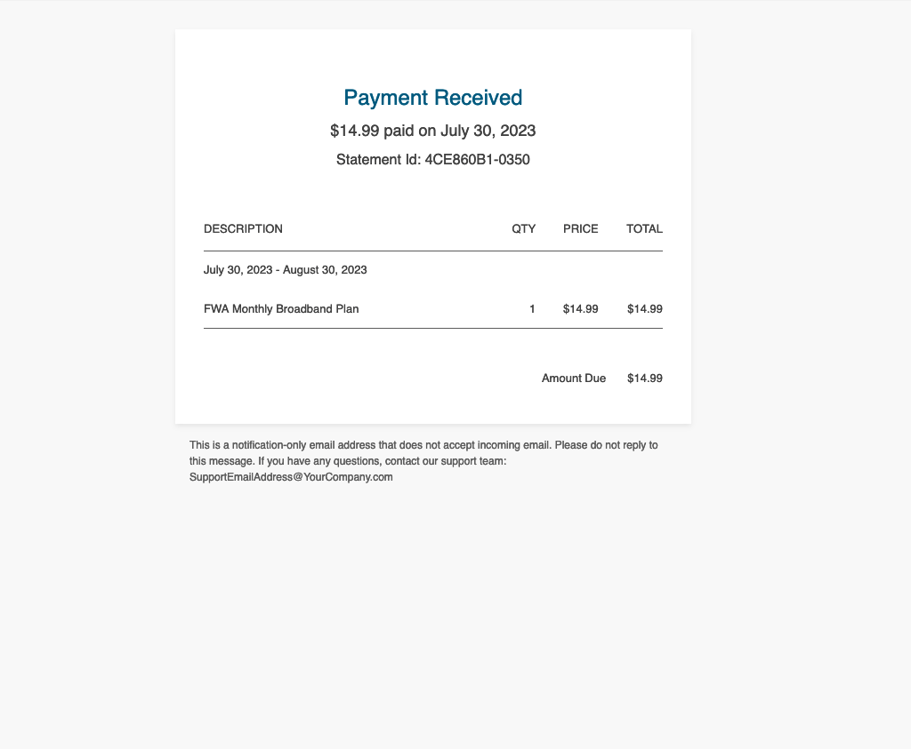
Zipit’s platform takes the pain—and human error—out of recurring revenue operations. With fully automated billing, dynamic alerts, and customizable usage thresholds, OEMs can reduce manual overhead, accelerate revenue recognition, and prevent the kind of revenue leakage that quietly erodes profit at scale.
And, our team has worked with companies of all sizes and industries to create compelling, managed IoT service offerings that deliver business growth.
Accurate, consolidated usage visibility
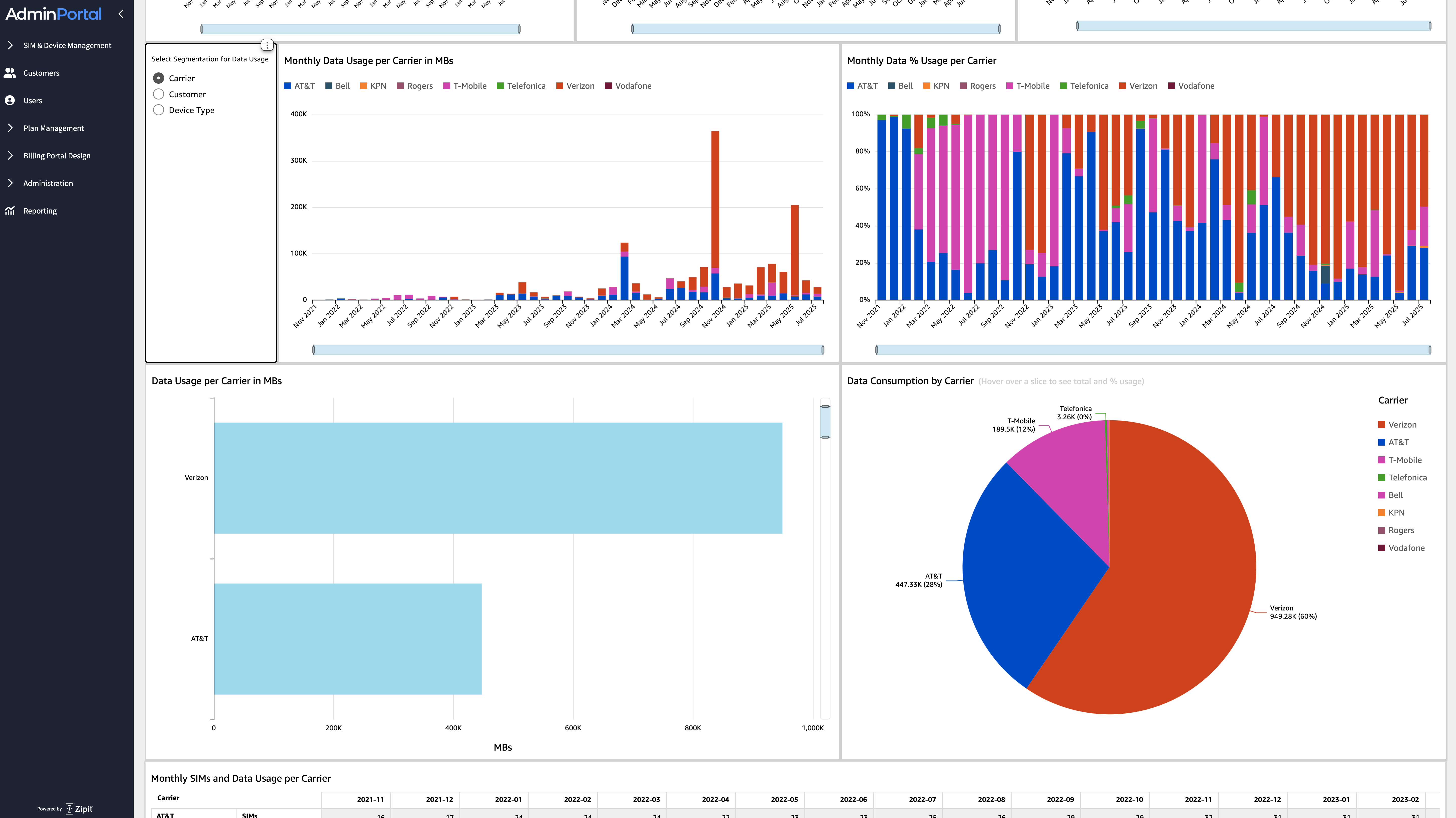
Zipit’s platform provides consolidated, real-time usage visibility across all carriers and device populations. This isn’t just for analytics, it closes the gaps that cause operational, financial, and support errors, creating a single source of truth for monetization and cost controls. This is critical for global deployments and multi-channel models.
Built-in commercial model flexibility and managed taxation support
Zipit recognizes that no two IoT monetization strategies look the same. That’s why its platform is architected for flexibility:
- Bundle connectivity into your SaaS offering for a seamless end-user experience.
- Expose connectivity as a transparent line item, enabling B2B clients or partners to manage their own cost structures.
- Support complex B2B2C and dealer hierarchies with role-based access, custom pricing, and multi-level billing logic. This empowers solution providers to expand into new verticals and channels without building a bespoke backend for every new market or customer type.
Additionally, we provide increased operational support for IoT OEMs by serving as a merchant of record, taking on the responsibility of calculation, collection, and filing of relevant taxes.
In IoT, a primary revenue challenge is orchestrating monetization where connectivity costs, real-world device usage, and platform value are deeply intertwined with margin. Zipit is the only platform that unifies these variables, enabling OEMs to charge confidently, defend margin, and adapt quickly as usage dynamics shift across geographies and product lines.

Monetize IoT innovation with Zipit Wireless
Our customer base relies on us for connecting devices, running recurring revenue businesses, delivering IoT-as-a-Service, and counting on the platform for predictable, defensible margins. Too many providers focus on cheap data or device-pushed fees. Zipit challenges the industry’s race-to-the-bottom mentality. Cheap data alone is not a business model, especially when unpredictable usage, roaming policies, or global carrier complexity can turn a “low cost” promise into a margin nightmare. Zipit’s commercialization-first approach ensures customers are equipped to price, package, and manage their offerings for sustainable growth.
Tested and proven at scale, Zipit’s platform supports globally deployed sophisticated IoT OEMs, spanning industries from smart farming to connected wearables to vehicle telematics. Each vertical presents unique monetization, compliance, and operational needs, and we are equipped to provide every manufacturer with the individual guidance they need.
In a market where too many vendors treat monetization as a bolt-on, Zipit Wireless makes it foundational. As a result, OEMs launch faster, grow globally, and, most importantly, monetize with confidence, no matter how complex their offering or how unpredictable the markets they serve.

Zipit Blog
The latest IoT insights and platform updates from Zipit.
Zipit Wireless Launches eSIM Integrated to Deliver Native AT&T, Verizon and T-...
Fixed wireless internet is transforming how homes, businesses, and connected devic...

In a world increasingly populated by smart devices and real-time data, reliable, s...