
What Is an eSIM? How eSIMs Work for IoT Deployments
by Ralph Heredia on Nov 3, 2026, 10:35:38 AM

Service disruptions, coverage gaps, and network shifts can quickly render an initial carrier choice ineffective, yet swapping physical SIM cards incurs expensive field support. By utilizing an eSIM, OEMs and enterprises can update carrier profiles over the air. However, the effectiven …
SIM Card Types and Sizes Explained
by Ralph Heredia on Oct 27, 2026, 1:40:19 PM

Choosing the wrong SIM for an IoT deployment can cost OEMs time, money, and long-term flexibility. A SIM that fits the device physically can still create problems if it limits carrier access, complicates activation, increases field service maintenance and truckrolls, or makes it harde …
The eSIM Readiness Checklist: Is Your IoT Deployment Ready for eUICC?
by Ralph Heredia on Oct 26, 2026, 11:35:49 AM

Everyone in IoT is talking about eSIM. For OEMs, that conversation often starts with the promise of greater flexibility: fewer physical SIM swaps, easier multi-carrier deployments, streamlined global rollouts, and more control over connectivity after devices leave the factory.
Zipit Launches New eSIM for IoT and Fixed Wireless Devices
by Dan Heredia on Oct 20, 2026, 8:45:00 AM
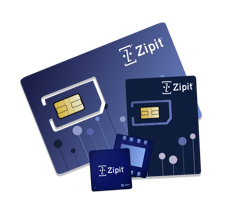
Zipit Wireless Launches eSIM Integrated to Deliver Native AT&T, Verizon and T-Mobile Connectivity Through a Single IoT eSIM [Greenville, SC]—[October 12, 2026]—Zipit Wireless, a Wireless Logic company, today announced the launch of eSIM Integrated, its new eUICC eSIM platform, des …
Solving eSIM Limitations with a Connectivity Partner
by Ralph Heredia on Jul 9, 2026, 11:47:24 AM

GSMA SGP.32 foretold a revolution in the IoT ecosystem, with IoT deployment-designed eSIMs transforming the potential performance, reliability, and accessibility of devices. IoT eSIMS arrived with a compelling promise: they could help OEMs eliminate physical SIM logistics, switch carr …
Native Connectivity: The Trend Happening in Markets Around the World
by Dan Heredia on Apr 9, 2026, 1:01:13 PM

For years, international IoT deployments operated on the simple assumption that permanent roaming strategies could offer global connectivity to devices. An IoT company could design once, deploy everywhere, and leverage international roaming agreements to maintain connectivity for high …
Can You Future-Proof Your IoT Strategy? A Roadmap for Long-Term Success
by Ralph Heredia on Oct 10, 2025, 12:21:02 PM

Internet-connected objects increasingly dominate both professional and personal spaces. From consumer IoT devices for smart homes to industrial IoT technology for manufacturing operations, the future is shaped by IoT. IoT manufacturers are responsible for designing devices that remain …
What is Multi-Network Connectivity? A Comprehensive Guide
by Ralph Heredia on Jul 11, 2025, 10:55:33 AM

With multi-network connectivity, IoT devices connect seamlessly and operate across multiple cellular networks. Multi-network SIM strategies ensure IoT devices maintain reliable, uninterrupted coverage as they move between geographical locations or encounter network disruptions. By red …
What is GSMA SGP.32 for eSIMs?
by Ralph Heredia on Jun 12, 2025, 10:22:13 AM

GSMA SGP.32 is a transformative standard designed to streamline eSIM remote provisioning for IoT. It introduces simplified device architecture, autonomous profile management, and cloud-native scalability, laying the foundation for global, zero-touch IoT deployments.
IoT SIM Cards — an Introductory Guide
by Ralph Heredia on May 3, 2021, 12:33:05 PM

The IoT SIM card (also known as an M2M SIM) is a variation of the traditional SIM which connects mobile phones to cellular networks and stores user information. The primary difference is that an IoT SIM card is intended to support IoT devices, with their unique data consumption rates/ …